


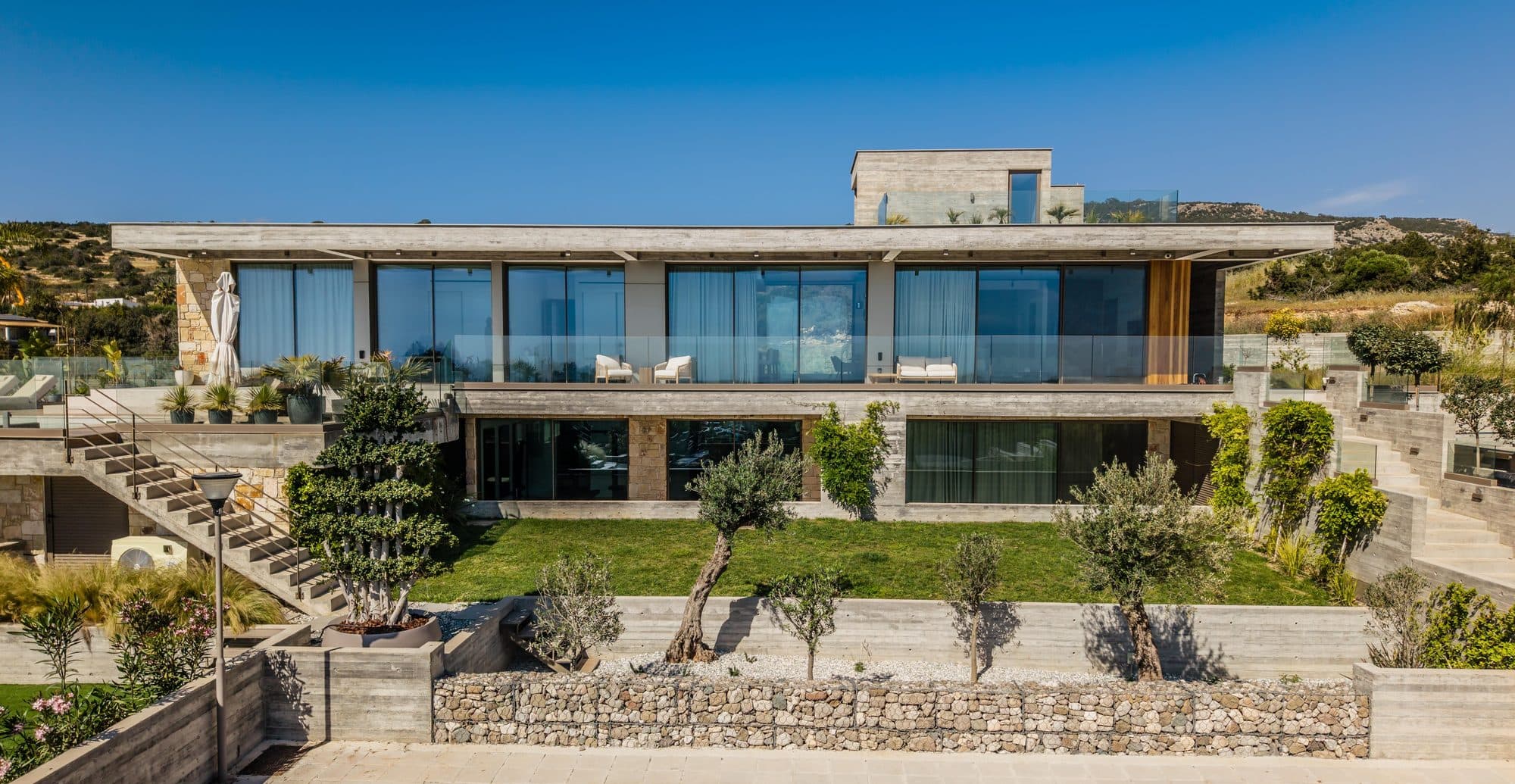
A great development is not defined by how much you can build, but by how intelligently you choose what to build — and what to leave unbuilt.
When people talk about a great development, the conversation often starts with architecture.
For me, it starts much earlier.
A great development is the result of many decisions — choosing the right land, understanding what belongs on it, creating the right master plan, designing homes around the way people actually live, and then building them properly.
You can use expensive materials and create impressive architecture, but if the fundamentals are wrong, I don't believe you have created a great development.
And the first fundamental is always the land.
It Starts With the Land
There is a reason we have been saying "location, location, location" in property for so many years.
The choice of land is probably the most important decision a developer makes.
When I look at a potential site, I want to understand much more than its size and development potential. I look at the topography, accessibility, views, surrounding area, proximity to services and, of course, the planning regulations.
But I also believe you need to physically spend time there.
I like to visit land personally and, where possible, at different times.
Something that looks perfect on a plan can feel very different when you are actually standing there.
You may notice noise at a particular time of day. Traffic. The movement of the sun. Something in the surrounding area that could affect the quality of life. You also need to think about what could happen around the site in the future. A beautiful view today may not necessarily remain a beautiful view tomorrow.
These things matter.
At the same time, I don't believe a difficult site is automatically a bad site. An unusual shape or challenging topography can sometimes produce more interesting architecture.
We have seen this ourselves with projects such as Triangle House, where the characteristics of the site became part of the design rather than something we tried to fight against.
The building has to respond to the land, not the other way around.
Don't Build Simply Because You Can
One mistake I see quite often is trying to use every square metre that planning regulations allow.
Commercially, I understand why this happens. More building usually means more sellable area.
But that doesn't necessarily mean a better development.
Sometimes the spaces you decide not to build are just as important as the buildings themselves.
Green areas, walking or exercise paths, places for children, areas suitable for pets, landscaping and simply enough space between buildings can completely change the experience of living somewhere.
These spaces shouldn't be considered wasted land.
They are part of the development.
Aphrodite Hills was an important example of this in Cyprus when it was developed. At the time, it demonstrated what could happen when you thought beyond individual houses and created a complete environment.
Today we see the concept evolving further in projects such as Limassol Green.
Internationally, Costa Navarino is a development I particularly admire because architecture, luxury, local character and the natural environment have been brought together very carefully.
In Cyprus, Anassa is another example I have always appreciated. It fits into its natural surroundings rather than trying to dominate them.
This is something I believe strongly:
A great development is not defined by how much you can build on a piece of land, but by how intelligently you choose what to build — and what to leave unbuilt.
Start With the Master Plan
Before designing individual homes, you need to get the overall development right.
The master plan comes first.
Levels and elevations have to work. Access has to make sense. Different uses need to be positioned correctly. You have to think about privacy, orientation and views across the whole development.
Only then should you start thinking about the individual buildings.
And when you do, good design isn't only about architecture.
It is about everyday life.
I pay attention to things such as ceiling heights. Where possible, I like internal heights above 3.10 metres because they change the feeling of a room completely.
The position of air-conditioning systems matters. Storage matters. The connection between indoor and outdoor living matters.
Especially in Cyprus, outdoor space should be treated as part of the home. Terraces, barbecue areas, swimming pools and spaces where families and friends can spend time together are important.
A buyer may not notice every one of these details during the first viewing.
But they will notice them after living in the home.
That is the difference between designing something to sell and designing something to live in.
Quality Isn't About Buying the Most Expensive Material
I don't agree with the idea that expensive materials automatically mean quality.
Of course materials matter.
But you can take a very expensive material and install it badly.
Quality comes from how something is built. It comes from workmanship, supervision, technical knowledge and the standards the developer is prepared to accept.
During construction, problems will happen. That is normal.
What matters is what you do when you find them.
If something isn't right, you correct it. Even when the future owner may never know there was a problem.
For me, that is part of the culture of a development company.
Material selection also needs to make sense for the location.
This is particularly important near the sea, where environmental conditions can affect materials very differently over time.
I prefer to use low-maintenance materials where appropriate — aluminium, concrete, HPL, marble and stone, for example. Timber can be beautiful, but it also needs maintenance.
We should be thinking about what the property will look like five or ten years after delivery, not only about how it photographs on the day we hand over the keys.
Quality is not how a development looks on day one. It is how well it continues to perform over time.
Trust Is Also Part of the Development
There is another side of development that is just as important as architecture and construction.
The relationship with the buyer.
Buying a property is a major decision. For an international buyer purchasing in Cyprus, there is also the uncertainty of buying in another country and dealing with a system they may not know.
Legal security is therefore extremely important. Buyers need to know that their ownership is protected, and I believe they should always have the freedom to use independent legal representation.
But trust isn't created only through contracts.
It is created through communication and consistency.
If you tell a client something, you need to deliver it. If something changes, you need to explain it. People want to know what is happening with their property.
Personal contact matters as well.
I believe buyers want to know the people behind the company. They want to know who is responsible and who will be there if something goes wrong.
For me, the sale itself isn't the best measure of success.
I would rather look at the client several years later.
Are they still happy with the property? Has it maintained or increased its value? Would they buy from us again?
If the answer is yes, then we did our job properly.
We Have to Build for Tomorrow
The property market will continue to change.
Land is becoming more limited and construction costs continue to rise. I think this will naturally lead to more efficient use of space and to homes that are increasingly energy efficient and technologically advanced.
Energy performance is already much more important to buyers than it was in the past. People are beginning to understand that the real cost of a home isn't only the purchase price. It is also what that home costs to operate every month for many years.
Technology will play an increasingly important role in this.
Smart systems that allow people to monitor and control energy consumption and manage their homes will gradually become standard rather than optional.
But technology moves quickly.
So I don't think our job is to guess exactly what technology somebody will be using ten years from now.
Our job is to make sure the home can adapt to it.
Providing infrastructure that allows future upgrades is becoming increasingly important. A home built today should not become outdated simply because technology changed.
Build Better, Not More
As I look at the future of development, I increasingly believe in quality over quantity.
I would rather see fewer developments done properly than more developments created simply to maximise what can be built.
Better planning. Better construction. More technology. Greater energy efficiency. More green and common spaces. More respect for the environment.
Because ultimately, we are not simply creating buildings.
We are creating places where people will spend a significant part of their lives.
And when all these elements come together — the land, the architecture, nature, technology, construction quality and the spaces between the buildings — something changes.
People feel comfortable there.
They feel that they belong there.
For me, that is what makes a development truly great.
A truly great development is one that, years after it was completed, still feels like the right place to be.